UI/UX law
// Memory & Attention;
Peak-End Rule
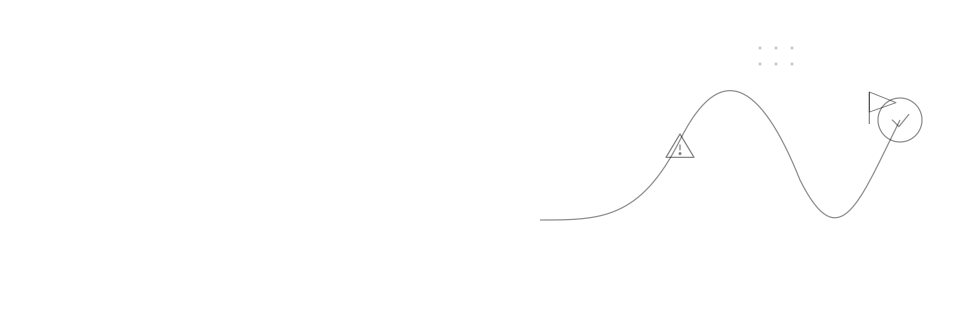
People judge an experience mostly by its most intense point (the peak) and how it ends, not by the average of every moment.
Mechanism
Why it happens
Memory doesn't sample an experience evenly; it's dominated by emotional extremes and final moments, which is what gets recalled and retold.
Impact
Why it matters
- One bad moment in an otherwise fine flow can define how the whole thing is remembered
- A weak ending undoes the credit earned by everything before it
- Fixing the worst moment moves perception more than polishing an already-fine one
Example
Without vs. with
Checkout ends with a plain "Order #48213 placed" after a confusing address error mid-flow.
You’re all set, Sam
Order #48213 ships Thursday. We’ll email tracking the moment it moves.
The address error is fixed inline with a clear reason, and checkout ends with a specific, warm confirmation and next steps.
Checklist
How to apply it
Invest disproportionately in the hardest moment of a flow and its final confirmation screen
End multi-step flows on a specific, genuinely positive note, not a generic "Success"
Fix the worst moment in a journey before polishing parts that already feel fine
Design error states as carefully as success states; a bad peak defines the experience
Recipe
Code example
Where it shows up