UI/UX law
// Memory & Attention;
Zeigarnik Effect
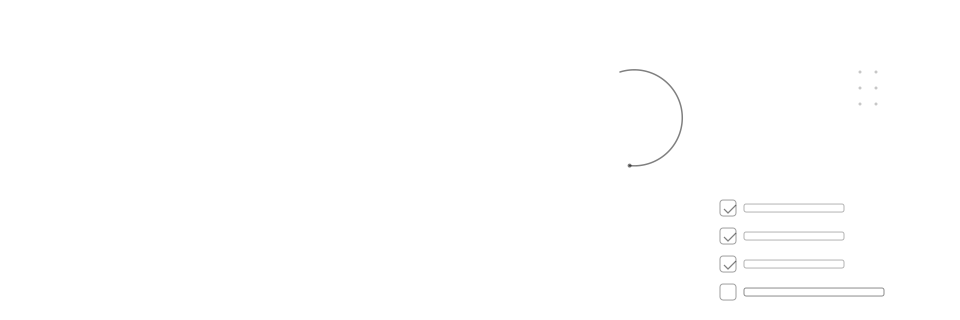
People remember unfinished or interrupted tasks better than completed ones. Open loops keep nagging at attention.
Mechanism
Why it happens
An incomplete goal keeps a low-level cognitive tension active until it's resolved, which is why unfinished tasks intrude on thought.
Impact
Why it matters
- Unfinished tasks already occupy attention. Visible progress just confirms what's already true
- Losing progress on an interrupted task feels disproportionately bad because of that tension
- The same mechanism that helps re-engagement can be abused as a dark pattern
Example
Without vs. with
Tab closed
All progress lost. Start over.
A multi-step application form loses all progress if the tab is closed.
Welcome back
Continue where you left off: step 3 of 5.
The same form autosaves after every step and greets a returning user with "Continue where you left off."
Checklist
How to apply it
Show clear progress ("3 of 5 steps complete") so unfinished tasks are visible, not just felt
Use partial-completion nudges ("Your profile is 80% complete") to draw people back
Autosave drafts so an interrupted task resumes exactly where it left off
Don't manufacture false open loops purely to drive engagement. It erodes trust
Recipe
Code example
Where it shows up